
Carriage Shoppe has published new consumer guidance explaining how collision damage that is not visible during an initial exterior inspection can be identified as repair planning progresses. The September resource focuses on how technicians use damage documentation, appropriate access to affected areas, structural evaluation, and vehicle-specific repair information to develop a more complete understanding of collision damage.
The new guidance expands on Carriage Shoppe's existing collision repair information by concentrating specifically on the difference between damage visible immediately after an accident and conditions that may only become accessible during later stages of evaluation.
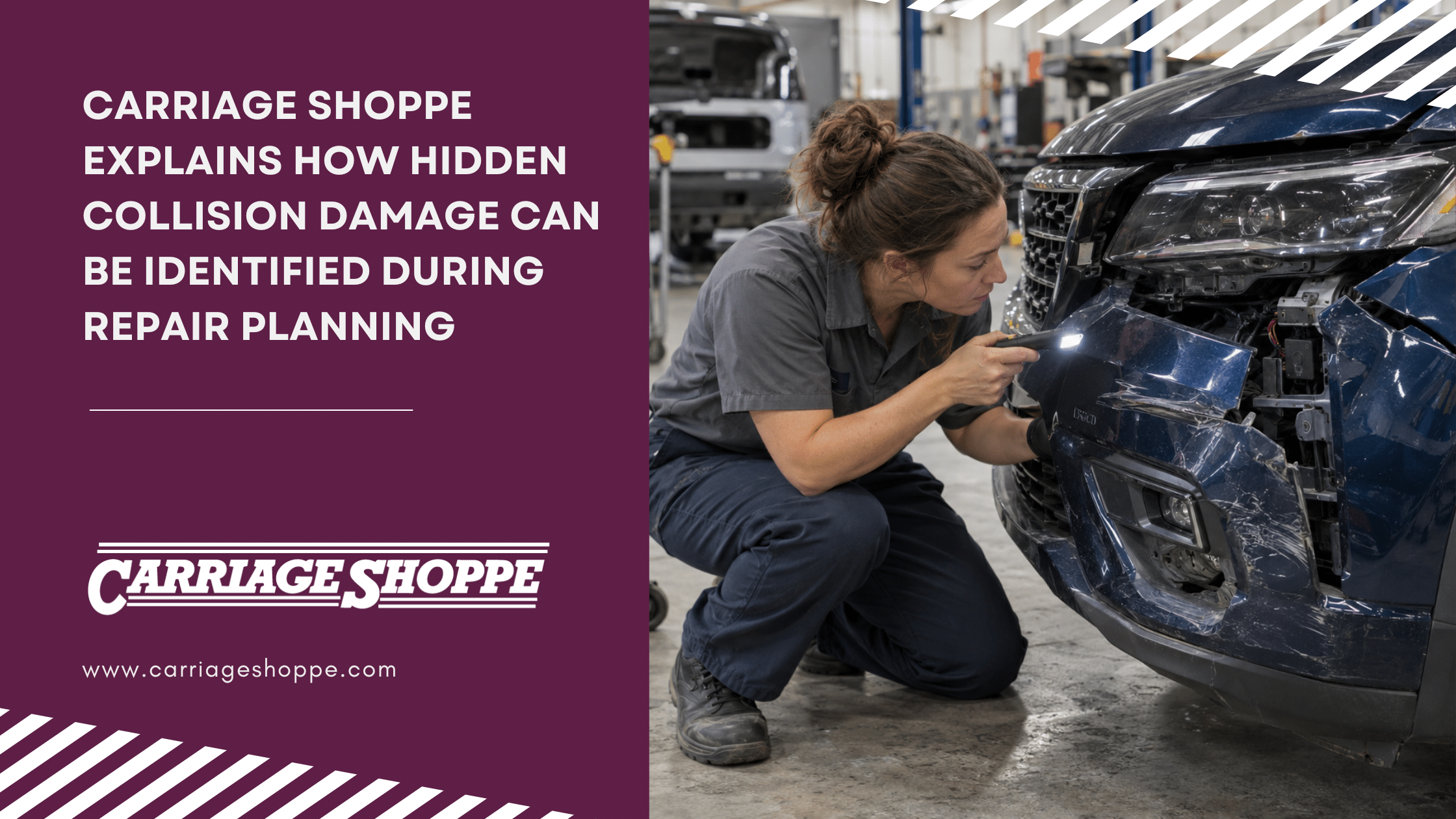
An initial inspection provides an important starting point. Technicians can document visible dents, cracks, deformation, displaced components, damaged paint, and other observable conditions. The location and apparent direction of the impact can also help identify areas that may require further evaluation during repair planning.
Exterior appearance, however, does not always provide access to every component associated with the impact area. Bumper covers, body panels, lamps, trim, and other installed components can limit access to brackets, reinforcements, absorbers, mounting points, wiring, sensors, and adjoining parts.
The September guidance emphasizes that these covered areas should not automatically be considered damaged. Instead, their condition can be evaluated when appropriate repair planning provides access to them.
A bumper assembly illustrates how this process can work. Visible damage may initially appear concentrated on the exterior bumper cover. Depending on the vehicle, components located behind that cover can include reinforcement areas, energy-absorbing materials, mounting hardware, wiring, and electronic equipment.
When removal of the affected bumper components is appropriate to the repair, technicians can inspect previously covered areas and document their actual condition. Additional collision-related findings can then be incorporated into the repair plan when applicable.
Structural evaluation represents another part of the process. Modern vehicles commonly use integrated structures designed around specific dimensions, attachment points, materials, and impact-management areas. Collision-related changes to those areas may not always be apparent from the exterior.
Carriage Shoppe identifies computerized measuring and structural repair among the capabilities used in its Fort Collins collision repair operations. Measurement can provide information about structural conditions that cannot be determined solely by looking at exterior panels.
The same principle can apply around wheel and suspension areas. An impact near a wheel may lead technicians to evaluate related components or vehicle geometry when appropriate to the documented collision. This evaluation provides evidence about the condition of those areas rather than assuming that nearby components were affected.
Vehicle technology can add another layer to hidden-damage evaluation. Cameras, radar units, sensors, wiring, and electronic modules may be positioned within or behind collision-sensitive exterior components. Their location can make vehicle identification and technical research relevant when the surrounding area has been affected.
Carriage Shoppe provides additional information about manufacturer-specific repair considerations through Yoder Collision Network's OEM certification information. Manufacturer procedures can provide technical requirements associated with particular components, materials, inspections, measurements, and repair operations.
The September resource distinguishes between hidden damage and assumed damage throughout the repair-planning process. A concealed component is not considered damaged simply because it is located behind an impacted panel. Additional collision-related conditions become part of the repair plan when they are identified and documented through appropriate evaluation.
This distinction also helps explain why repair documentation can develop after the initial estimate.
An initial estimate reflects conditions and repair information reasonably available during the first evaluation. As technicians gain appropriate access to damaged areas and obtain additional technical information, the documented repair scope can become more detailed.
For example, an exterior inspection may identify damage to a fender, bumper, or another body component. Later access can allow technicians to evaluate mounting points, brackets, adjoining components, or structural areas that were previously covered. If those findings affect the required repair operations, they can be documented as part of the developed repair plan.
Modern vehicle construction can make this staged evaluation particularly relevant. High-strength steels, aluminum, plastics, composites, electronic equipment, and other materials and technologies can be incorporated into different areas of the same vehicle. The condition of each affected component and the technical information applicable to it can therefore matter when determining the repair approach.
Additional information about exterior component restoration is available through Yoder Collision Network's auto body repair information.
The September guidance presents hidden-damage evaluation as a progression from what can initially be observed to what can later be documented. Technicians begin with visible collision conditions, identify areas requiring further evaluation, gain appropriate access where necessary, and use measurements or vehicle-specific information when those steps apply to the repair.
This framework provides consumers with context for why a developed collision repair plan can contain more information than an initial exterior assessment without suggesting that every accident results in concealed structural, mechanical, or electronic damage.
By publishing the September guidance, Carriage Shoppe is providing Fort Collins vehicle owners with a focused explanation of a part of collision repair planning that may not be apparent from looking at a damaged vehicle. The resource emphasizes that exterior appearance is one source of information, while appropriate access, inspection, measurement, and technical research can provide additional information needed to document the individual repair.
Carriage Shoppe is part of Yoder Collision Network and provides collision and auto body repair services from its facility at 327 S Link Ln, Fort Collins, CO 80524. The facility's services include structural and unibody repair, body repair and refinishing, diagnostic procedures, and other collision-related repair operations.
###
For more information about Carriage Shoppe, contact the company here:
Carriage Shoppe
Micah
970 482 3597
officestaff@carriageshoppe.com
327 S Link Ln, Fort Collins, CO 80524