
Can You Drive After a Collision Without Immediate Repairs?
North Hampton, United States - February 6, 2026 / Committed Collision & Auto Body Center /
North Hampton, NH - After any car accident, even one that seems minor, a vehicle may appear fine yet have hidden damage that can compromise safety. Committed Collision & Auto Body Center in North Hampton, NH, urges drivers to avoid assuming road‑worthiness until a full professional inspection and auto collision repair are completed. That step can be critical to avoid structural, mechanical, or safety‑system failures later.

Hidden Damage Can Make a “Drivable” Vehicle Unsafe
Some damage from a collision may be obvious: broken lights, dented panels, and fluid leaks. But many dangerous issues remain out of sight. According to experienced car collision repair shops, even a low‑speed collision with no visible damage can alter a vehicle’s frame alignment, suspension geometry, or structural integrity.
Driving on New Hampshire roads without addressing such damage can increase risk. What feels like normal steering or braking today may turn into unpredictable behavior under hard braking, sharp turns, or poor weather.
Wheels and suspension components such as control arms, tie rods, or struts may have been stressed or bent during impact. Over time, continued driving can accelerate wear, cause uneven tire wear, and lead to suspension failure, all potentially costly and dangerous.
Modern Safety Systems (ADAS) Are Particularly Vulnerable
Many newer vehicles include Advanced Driver Assistance Systems (ADAS): lane‑keeping assist, automatic braking, blind spot detection, and more. These systems rely on precisely positioned sensors, cameras, and radar. Even a modest bump can misalign sensors or disturb mounts.
If ADAS components are not recalibrated after a collision, warnings may trigger late or not at all, lane‑departure assists may malfunction, and automatic braking may fail, creating a false sense of security.
Repairing and recalibrating these systems correctly is no longer optional for many vehicles. Skipping that step can compromise safety, impair functionality, and reduce overall protection precisely when safety matters most.
Legal, Insurance, and Long-Term Consequences of Delaying Repairs
Driving a damaged vehicle may have regulatory and insurance implications. In many cases, damage affecting lights, mirrors, or body panels can render a vehicle unsafe for public roads.
Insurance companies often expect drivers to prevent further damage after a collision. If a car continues to be driven and the damage worsens, especially structural or mechanical, insurers may question whether subsequent issues are part of the original accident or emerged from negligent driving.
Delaying auto collision repairs may also increase long‑term costs. What begins as a minor alignment issue or sensor misalignment can evolve into serious mechanical failures, expensive suspension or sensor repairs, and corrosion, particularly if damage exposes bare metal, a concern during harsh winter road conditions common in New Hampshire.
When It Might Be Temporarily Acceptable and When It Is Not
In rare cases, if damage is purely cosmetic, lights and signals work, there are no warning lights, fluid leaks, steering or braking issues, and the vehicle drives straight with no odd noises, a short, slow trip (for instance, to get to a repair shop) may be possible.
However, any sign of structural damage, misaligned wheels, fluid leaks, deployed airbags, warning lights, unusual vibrations, or steering/braking problems should trigger a tow to a car collision repair shop instead of risking further driving.
Why Professional Evaluation by a Collision Repair Specialist Is Critical
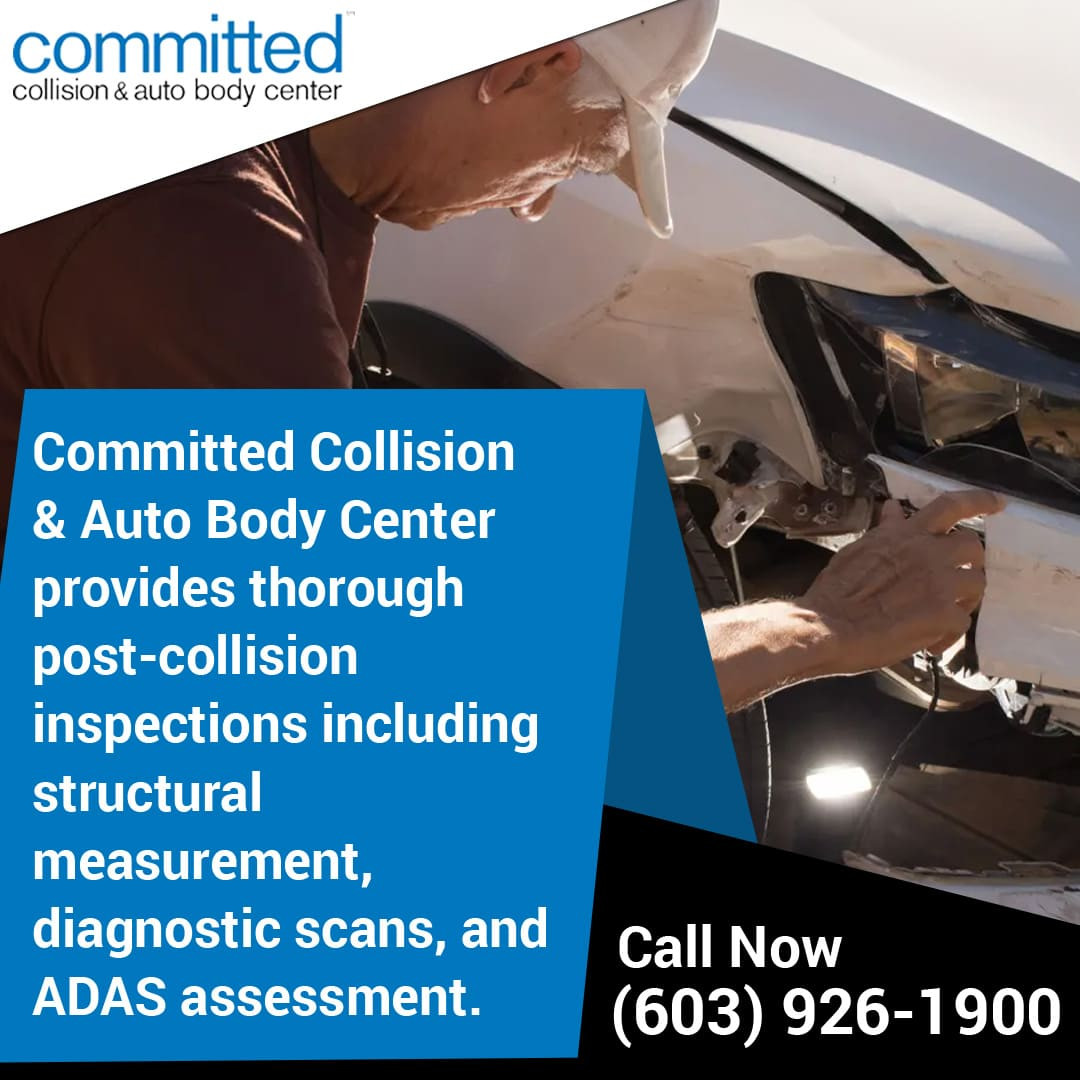
Only a collision repair specialist with proper tools can reliably assess hidden damage. A professional post‑collision inspection will typically include:
- Visual examination of frame, suspension, wheels, and undercarriage.
- Diagnostic scans to check for sensor or airbag issues or fault codes.
- Measurement of structural alignment and suspension geometry.
- Assessment of safety systems and ADAS sensor alignment with recalibration if needed.
With such a thorough evaluation, a vehicle will perform as expected and maintain crash protection standards rather than putting occupants at risk.

Safety Over Convenience
A vehicle that “feels fine” after a collision may still be unsafe. Structural, mechanical, or sensor‑related damage can compromise handling and critical safety systems, sometimes without any warning signs. Professional inspection and repair are the only reliable ways to confirm road‑worthiness and restore full vehicle safety.
Committed Collision & Auto Body Center is reputed to be the best collision repair shop in North Hampton, NH. Contact them at (603) 926-1900 or info@committedcollision.com to schedule a consultation. With skilled technicians, the company provides trusted body collision repair for late model vehicles. Their commitment to thorough inspections and quality work helps drivers restore their vehicles fully and safely.


Contact Information:
Committed Collision & Auto Body Center
203 Lafayette Road
North Hampton, NH 03862
United States
Derek Lighthall
(603) 926-1900
https://committedcollision.com/
Original Source: https://committedcollision.com/collision-repair/can-you-drive-after-a-collision-without-immediate-repairs/