
Smarter Approaches To Ongoing Back Pain Support
Preston, Australia - February 23, 2026 / Australian Sports Physiotherapy /
Building Movement Confidence
Low back pain remains one of the most common musculoskeletal concerns affecting Australians, often influencing daily activities, work performance, and overall quality of life. Australian Sports Physiotherapy has released a comprehensive guide exploring what approaches support improved function and long-term wellbeing. The article reviews current evidence, explains practical management strategies, and addresses common misunderstandings surrounding back pain. Individuals seeking guidance from a trusted Preston physio can gain valuable insights into active recovery, movement awareness, and individualised care planning. The guide highlights the importance of understanding contributing factors such as physical conditioning, lifestyle habits, and behavioural influences. By combining clinical knowledge with clear patient education, Australian Sports Physiotherapy encourages informed decision-making and supports individuals in developing sustainable strategies that promote mobility, confidence, and ongoing spinal health.
Low back pain is widespread. In fact, it’s the leading cause of disability worldwide, affecting not just athletes and tradies, but also desk workers, teens, and older adults alike.
The good news? Most people recover within a few weeks, and physiotherapy can play a key role in that process. This guide explains what really works when it comes to managing low back pain and what doesn’t.
What Causes Low Back Pain?
In many cases, back pain is non-specific, meaning it’s not due to a serious injury, fracture, or disc problem. Instead, it’s often the result of tension in muscles, joints, or ligaments, and sometimes even stress or postural habits.
That’s why physiotherapists use a biopsychosocial approach: looking not just at the tissues, but also at your stress levels, lifestyle, movement habits, and sleep, all of which can affect your recovery.
What Actually Works for Back Pain?
1. Staying active
The most effective treatment for most low back pain isn’t a pill or a procedure—it’s movement.
- Avoid bed rest: Prolonged bed rest can actually weaken your core and stiffen joints, making pain worse.
- The power of walking: Recent 2024 studies show that a regular walking program (aiming for 30 minutes, 5 times a week) can double the time between pain flare-ups.
- “Motion is lotion”: Gentle movement helps circulate nutrients to spinal discs and releases endorphins, your body’s natural painkillers.
2. Evidence-based treatments
Clinical guidelines (including those from the American College of Physicians) emphasise a “non-drug first” approach.
| Treatment Type | What the Evidence Says |
| Physical Therapy | High success rate. Focuses on core stability, posture retraining, and specific trunk muscle activation. |
| Cognitive Behavioural Therapy (CBT) | Surprisingly effective for chronic pain. It helps “retrain” how the brain processes pain signals. |
| Yoga & Tai Chi | Strong evidence for improving flexibility and reducing chronic pain through mind-body awareness. |
| Spinal Manipulation | Effective for some, particularly when combined with exercise, but effects are often modest and short-term. |
| Acupuncture & Massage | Shown to provide moderate, short-term relief for chronic symptoms. |
3. Physiotherapy treatment
Physiotherapy is often considered a first-line treatment for managing low back pain because it addresses the root cause of the discomfort rather than just masking the symptoms. A typical program focuses on three main pillars: pain relief, restoring mobility, and building long-term stability.
A physiotherapist will:
- Rule out serious causes of pain
- Provide a clear explanation of your condition
- Prescribe a personalised exercise program
- Teach safe movement strategies
- Support your mental and emotional well-being during recovery
Goals of physiotherapy
- Diminish discomfort and swelling.
- Boost bone density, flexibility, and stability of the spine.
- Restore regular function and movement patterns.
- Give patients self-management techniques to help them avoid flare-ups in the future.
When to See a Doctor Immediately
Most back pain is “nonspecific” (no dangerous underlying cause) and clears up in 4–6 weeks. However, seek medical attention if you experience:
- Sudden weakness or numbness in the legs.
- Loss of bladder or bowel control (this is a medical emergency).
- Pain following a major injury or fall.
- Unexplained weight loss or fever accompanying the pain.
What Doesn’t Help to Manage Low Back Pain (according to research)
Relying only on passive treatments
Modalities like massage, heat, or spinal manipulation may offer short-term relief, but long-term improvement relies on movement and active rehabilitation.
Overuse of medication
Painkillers like paracetamol or opioids are no longer first-line treatments. Anti-inflammatories may help in some cases, but should be used cautiously and under supervision.
Routine imaging
X-rays and MRIs are often unnecessary and may lead to confusion or fear. Unless there are red flags (such as trauma or nerve involvement), imaging is not usually needed.
Key Messages for Managing Low Back Pain
1. Stay active and keep moving
Gone are the days of bed rest. Gentle movement helps with healing. Your spine is strong and made to move. Even light walking or simple stretches can reduce stiffness and support recovery.
2. Pain doesn’t always mean damage
Pain can be intense, but that doesn’t always mean something is seriously wrong. Your back is full of sensitive tissues and nerves, and these can become irritated even without structural damage.
Understanding this can help reduce fear and improve confidence in movement.
3. The way we talk about pain matters
Terms like “unstable spine” or “weak core” can increase fear and lead to more pain and avoidance of activity. A key part of physiotherapy is providing clear, supportive language that helps build confidence and promote healthy movement habits.
Final Thoughts
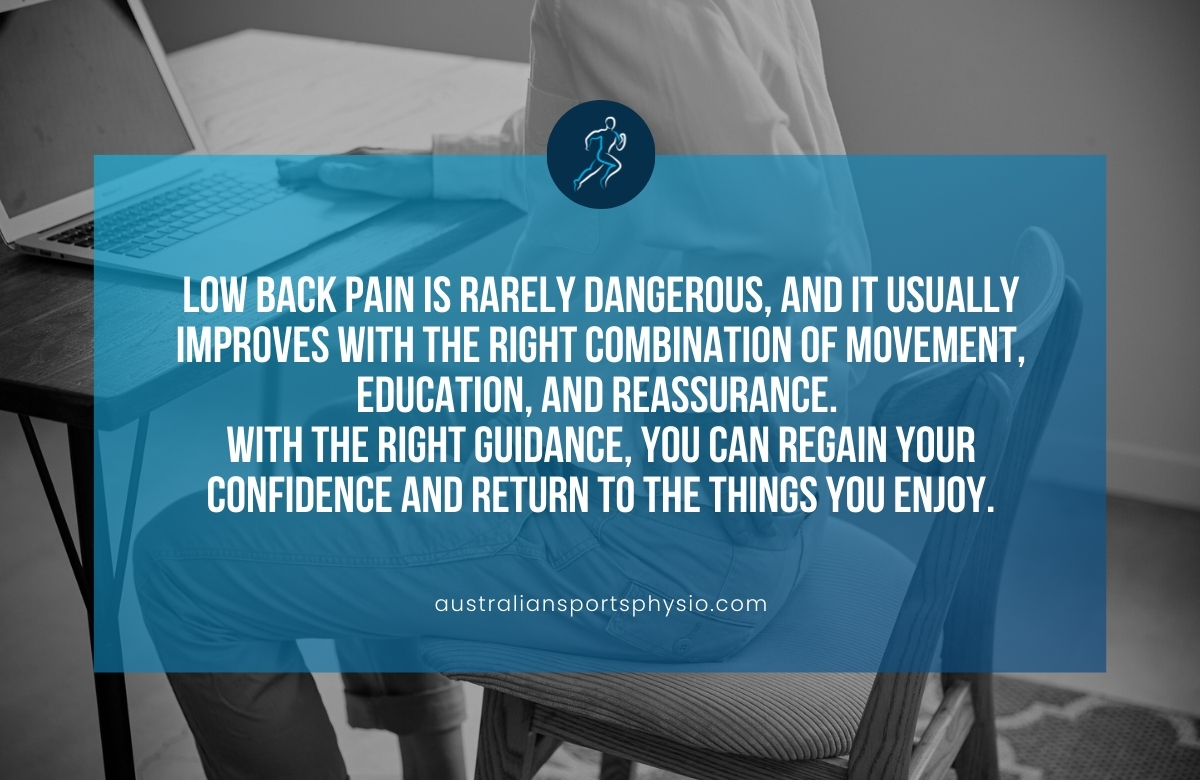
Low back pain is rarely dangerous, and it usually improves with the right combination of movement, education, and reassurance.
With the right guidance, you can regain your confidence and return to the things you enjoy.
Take Positive Steps For Back Health
 Preston is a well-established suburb in Melbourne’s northern corridor, recognised for its diverse community, vibrant local markets, green spaces, and convenient access to the city centre. The area continues to grow as a residential and commercial hub. Australian Sports Physiotherapy offers Physiotherapy within Preston and its surrounding suburbs, providing accessible services to support the local community.
Australian Sports Physiotherapy provides comprehensive assessment and tailored care for individuals experiencing ongoing or recurring back concerns. Those seeking guidance from a qualified Preston physiotherapist can explore practical approaches outlined in Managing Low Back Pain: What Actually Works. The clinic encourages individuals to learn more about effective management options and take proactive steps towards improved mobility and daily function. To arrange a consultation or find further information, contact Australian Sports Physiotherapy today and learn how evidence-informed physiotherapy may support your recovery goals.


Contact Information:
Australian Sports Physiotherapy
279 Gilbert Rd West Preston 3072
Preston, 3072
Australia
David Georgy
https://australiansportsphysio.com/


Original Source: https://australiansportsphysio.com/managing-low-back-pain-what-actually-works/